Cyber Security DVWA Lab Report
Penetration Testing
This report documents a controlled security assessment performed on the Damn Vulnerable Web Application (DVWA). Objectives: identify common web vulnerabilities, demonstrate exploitation paths in a lab environment, and propose effective remediations. Tools & techniques included Burp Suite, OWASP ZAP, Kali Linux utilities, and manual testing.
- SQL Injection
- Cross-Site Scripting
- Command Injection
- File Inclusion
- Cross-Site Request Forgery (CSRF)
- Bruteforce
- File Upload
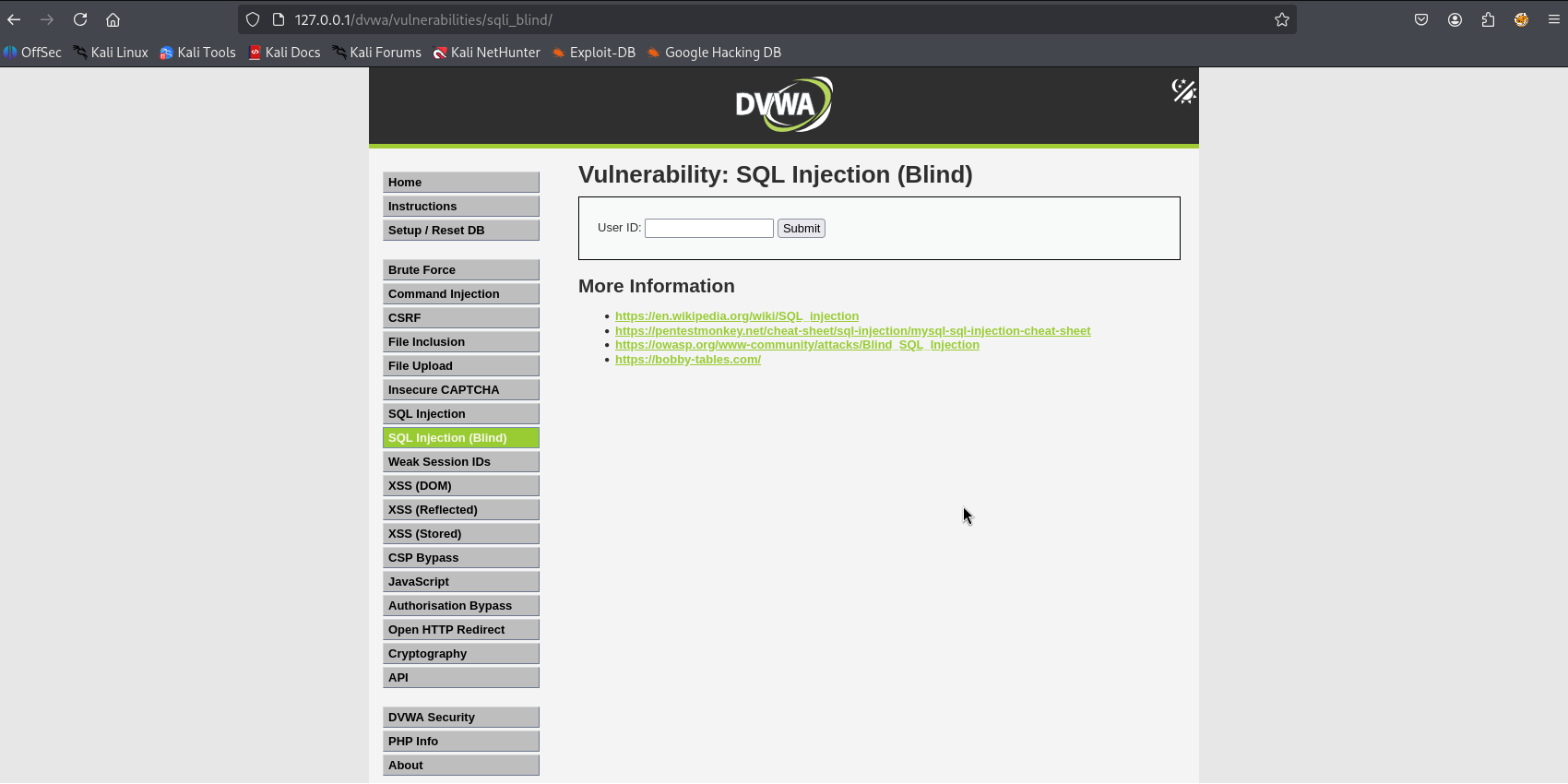
1. SQL Injection (SQLi)
Result
Input fields were vulnerable to SQL injection. Payloads such as ' OR '1'='1 -- bypassed authentication and
allowed enumeration of database records and metadata. Error-based responses revealed table/column structure on low/medium
security levels.
Solution
- Use parameterized queries / prepared statements (e.g., PDO, parameterized drivers).
- Server-side input validation and strict type casting; reject unexpected characters.
- Implement least-privilege DB accounts; disable verbose SQL error messages in production.
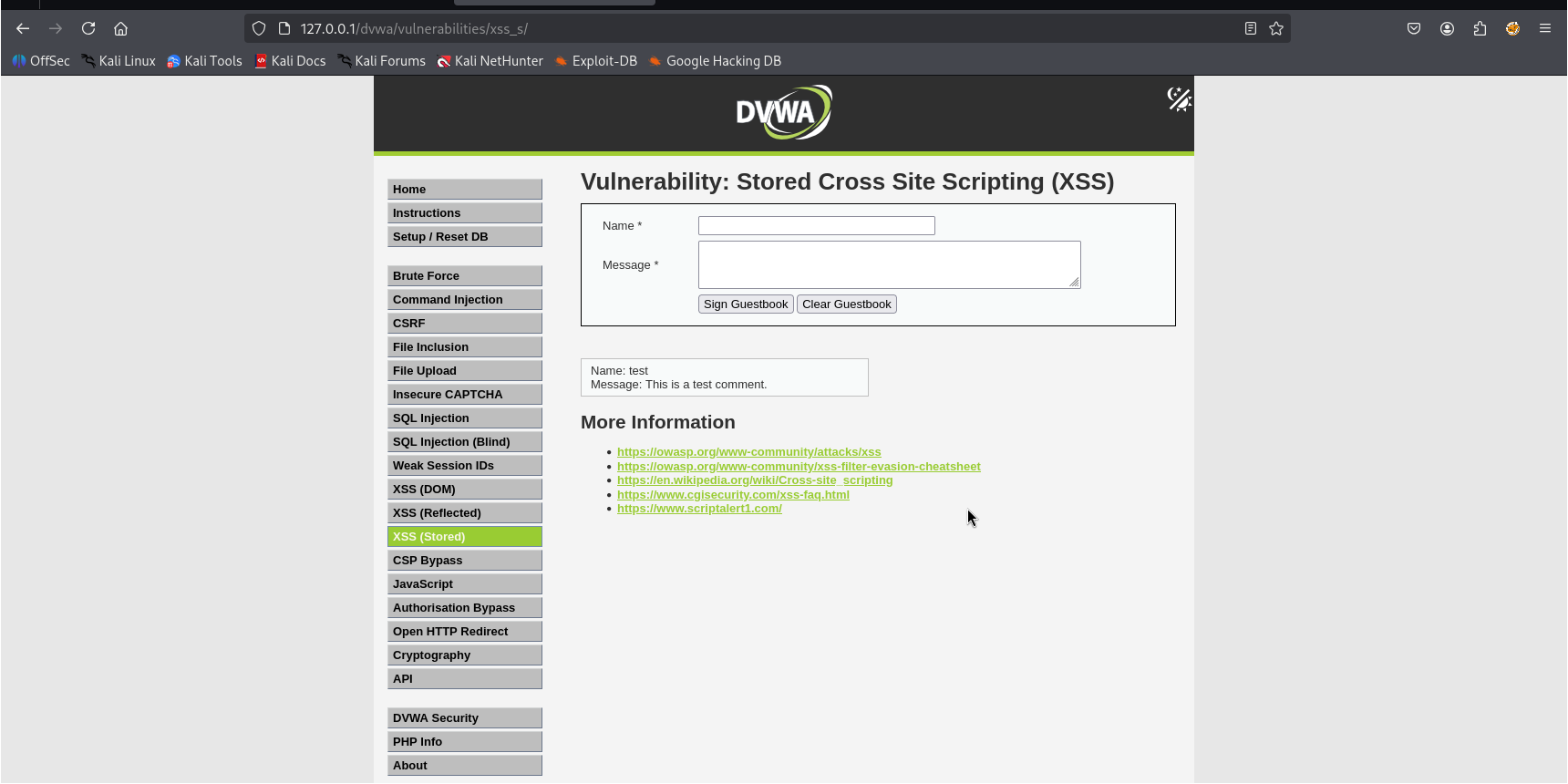
2. Cross-Site Scripting (XSS)
Result
Reflected and stored XSS identified. Injected scripts (e.g., <script>alert(1)</script>) executed in the victim’s browser,
exposing risk of session hijacking and client-side data theft.
Solution
- Context-aware output encoding (HTML, attribute, JS, URL contexts).
- Input sanitization and server-side validation; prefer safe templating frameworks.
- Deploy Content Security Policy (CSP) and HttpOnly/SameSite cookies where applicable.
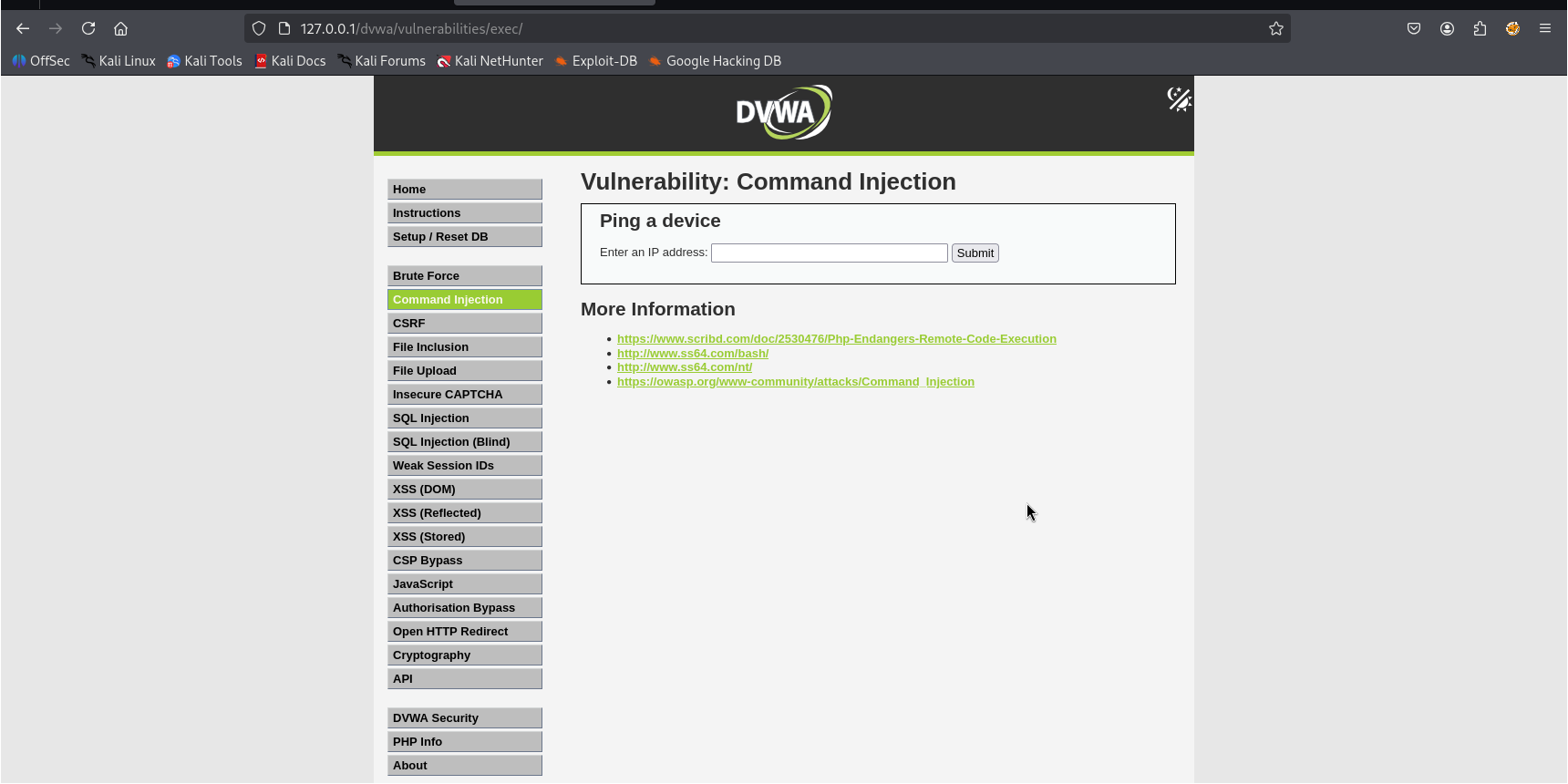
3. Command Injection
Result
Parameters were concatenated into shell commands (e.g., ping). Separators like ;&&| allowed arbitrary command execution,
demonstrating potential server compromise.
Solution
- Avoid shell execution; use safe language/system APIs.
- Strict allowlists for input; reject metacharacters and multi-command operators.
- Run services with least privileges; enable command execution sandboxing/AppArmor/SELinux.
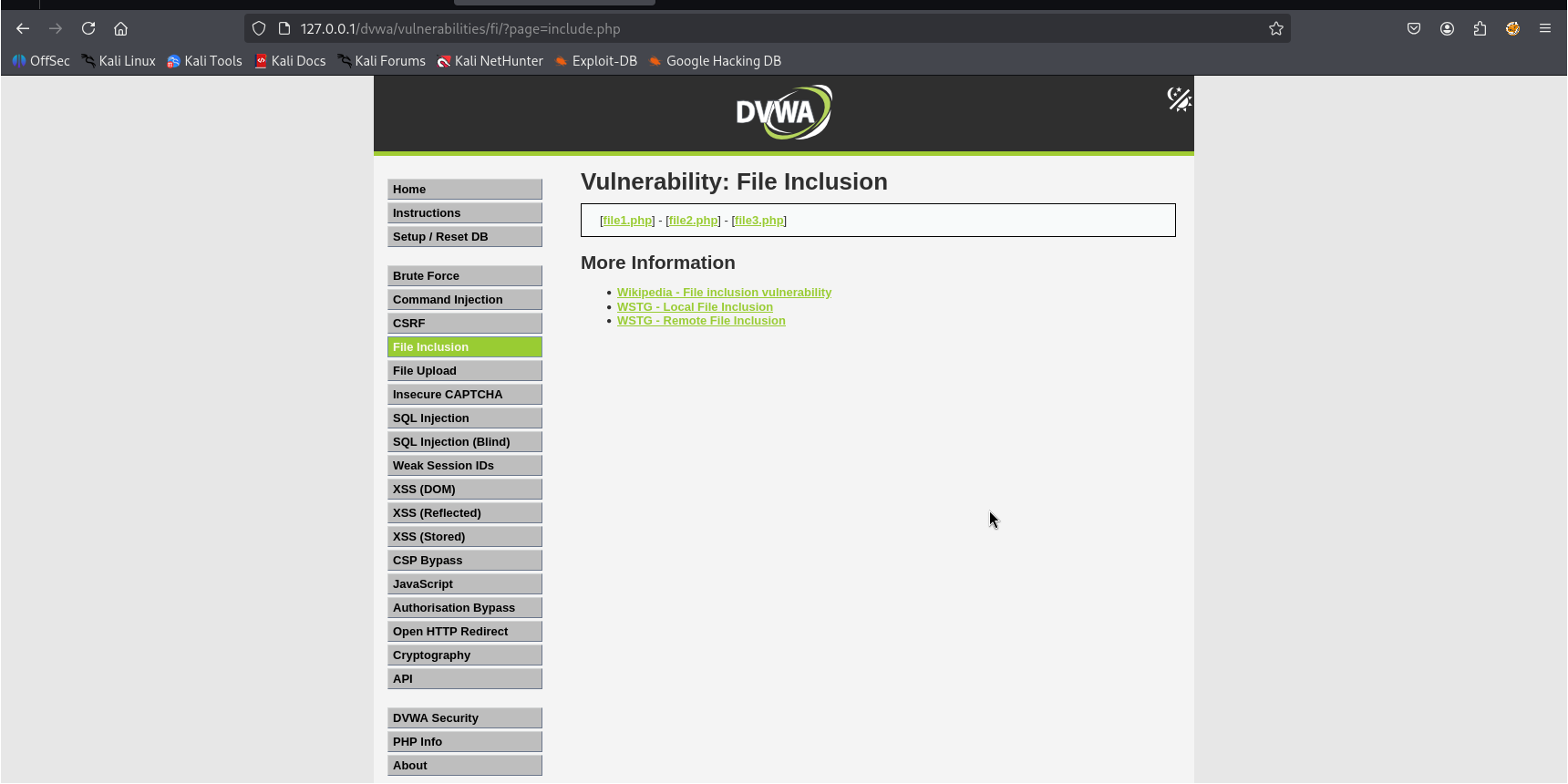
4. File Inclusion (LFI / RFI)
Result
Path parameters were injectable, enabling local file retrieval (e.g., /etc/passwd) and, where enabled, remote inclusion of hostile scripts.
Solution
- Use a strict whitelist of server-side include targets; map IDs to files rather than accepting paths.
- Disable remote file inclusion and URL wrappers; normalize and validate paths.
- Keep sensitive files outside the web root; enforce least-privilege filesystem permissions.
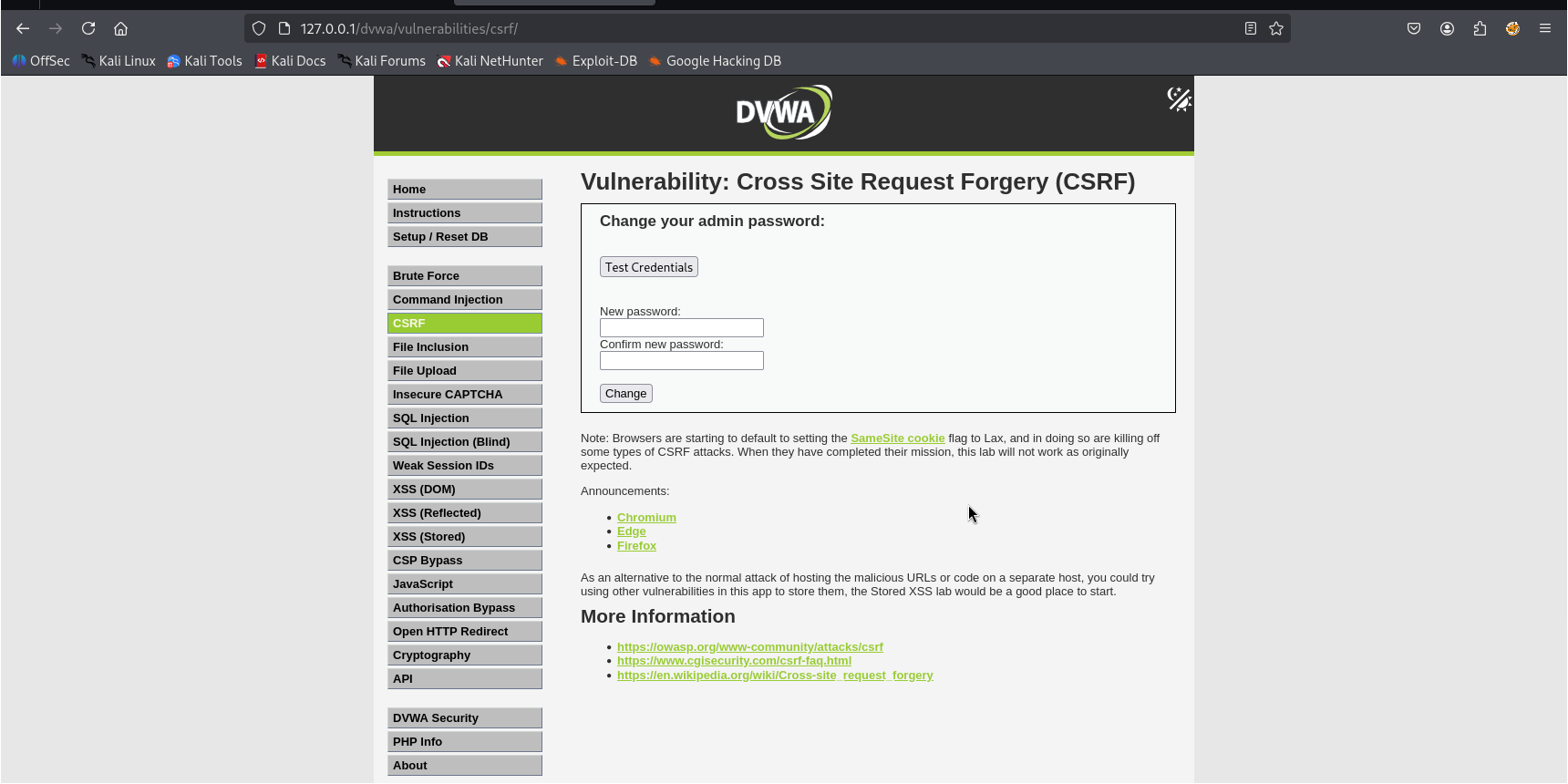
5. Cross-Site Request Forgery (CSRF)
Result
State-changing endpoints lacked CSRF defenses. A crafted third-party page could force authenticated users to perform unintended actions.
Solution
- Embed and verify unpredictable CSRF tokens per request (synchronized tokens or double-submit cookies).
- Enable
SameSitecookies and enforce re-authentication for critical actions. - Validate Origin/Referer headers where feasible.
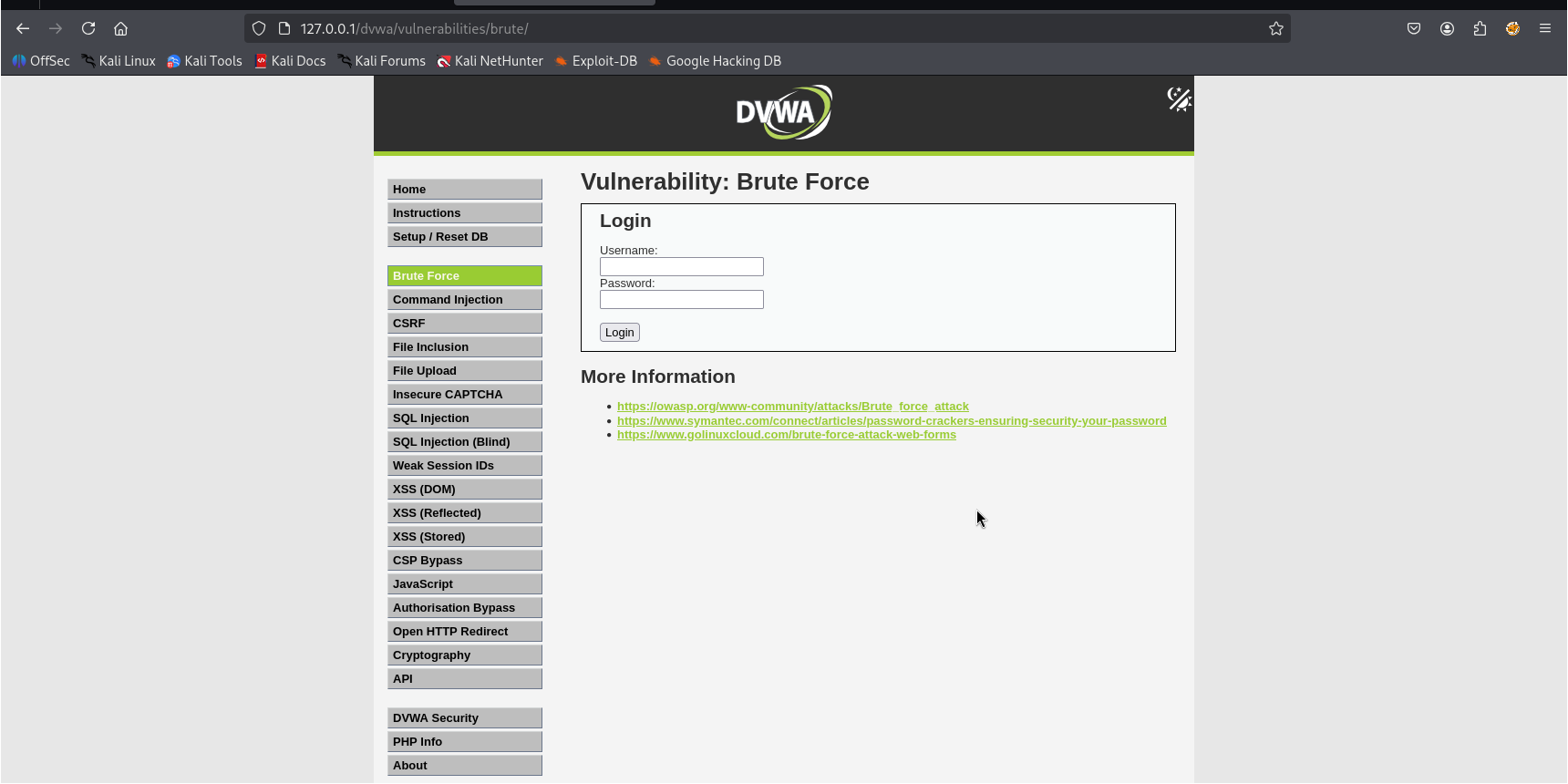
6. Brute Force / Weak Passwords
Result
Login endpoints accepted unlimited attempts without rate limiting, and weak credentials were accepted, enabling automated credential guessing.
Solution
- Enforce rate limiting, exponential backoff, and temporary account lockouts.
- Adopt strong password policies and breach-password checks; support MFA/2FA.
- Monitor authentication telemetry; alert on suspicious activity patterns.
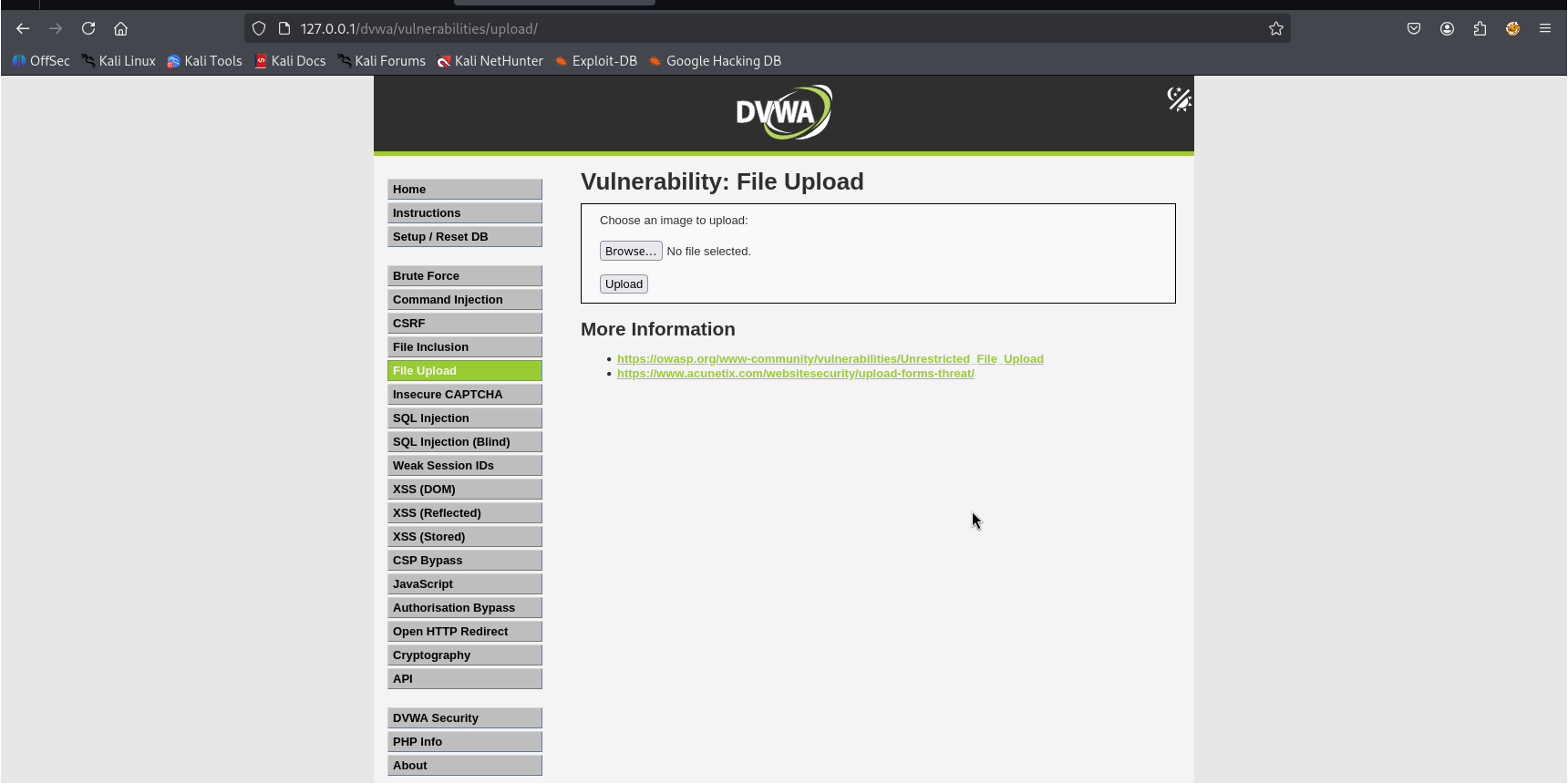
7. File Upload Vulnerability
Result
The upload feature accepted executable payloads (e.g., .php) with permissive MIME/extension checks, enabling remote code execution when accessed.
Solution
- Whitelist safe types; validate both filename and MIME using server-side checks and content sniffing.
- Store uploads outside web root; serve via indirection (e.g., ID lookups, not direct paths).
- Rename files, strip metadata, restrict permissions, and optionally scan with antivirus.